

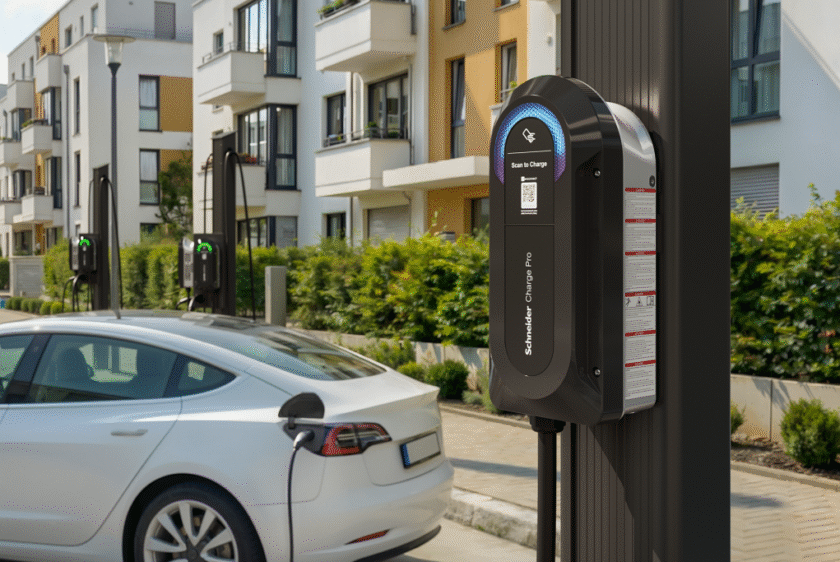
With more US drivers making the switch to electric vehicles (EVs), an accessible and reliable EV charging infrastructure has never been more crucial.
This growth is demonstrated by the following infographic:
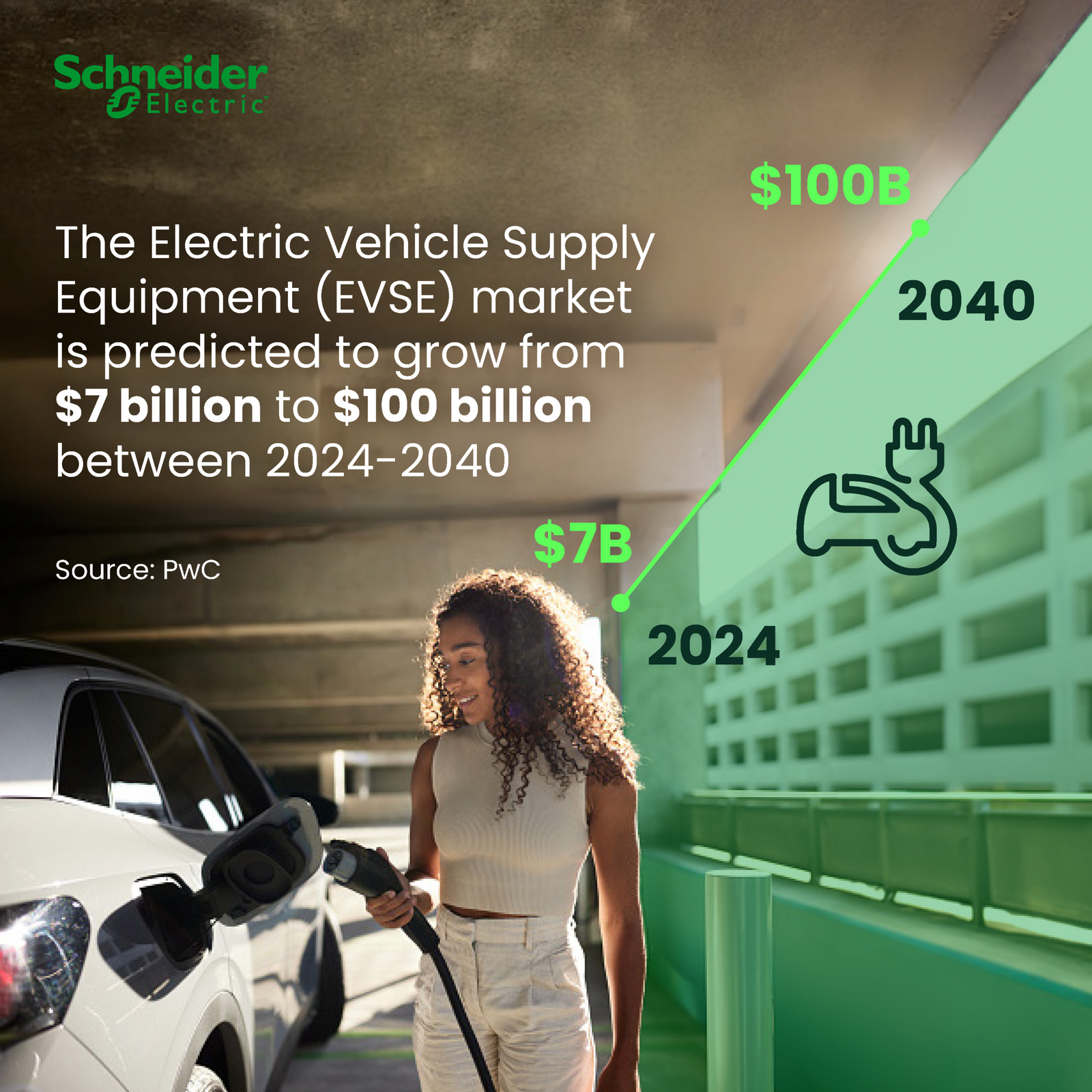
This increasing demand presents a clear income opportunity to business owners, who can support in strengthening EV charging infrastructure in the United States by adopting commercial electric car chargers.
Here, Arun Venugopal, Residential Products Leader at Schneider Electric, explains how business EV charging solutions can maximize profits, the key costs associated with EV charging, and what businesses need to consider when selecting the right charging solution for their site.
What EV Charging Stations Should Businesses Install?
There are various types of commercial EV charging stations:
- Level 2 (L2) is the most common type of charger
- DC Fast Chargers (DCFC) offer rapid charging, which is the right choice in some cases, for example, at a gas station
For most businesses, a L2 charger is the best option, because customers are happy to wait for their vehicle to charge while making use of the location’s amenities.
What Are the Benefits of Installing EV Charging Stations for Businesses?
Installing commercial charging stations can offer many revenue boosting advantages to businesses, as outlined below.
Can Businesses Improve Customer Retention with Commercial Electric Car Chargers?
With more EVs on the road, there are more US drivers actively seeking out public charging stations.
As a result, businesses offering charging capabilities in their parking lots can enjoy a boost to foot traffic because EV charging solutions transform locations into destinations for drivers seeking convenience.
Can Businesses Boost Profits with EV Charging Income?
Businesses also generate direct income from EV chargers. Businesses can monetize EV charging stations by setting their own rates (per kWh or per hour), which allows them to unlock a passive revenue stream.
Can Commercial EV Charging Stations Increase Property Value?
Commercial properties with a strong EV charging infrastructure often see higher valuations too. This allows business owners to justify higher lease rates for occupants who view charging as a must-have utility.
Can Workplace EV Charging Stations Support Employee Retention?
In a competitive job market, workplace EV chargers are a high-value amenity, because they help businesses to:
Can Businesses Improve Brand Reputation with Commercial EV Charging Solutions?
Installing commercial EV chargers is also a visible way to signal a commitment to sustainability and innovation, which helps to strengthen brand reputation among customers and potential investors.
What Type of Businesses Benefit from Installing EV Chargers?
Many US businesses can enjoy the financial benefits of installing EV charging solutions, including:
- Multifamily and commercial real estate ventures
- Hospitality and retail venues
- Workplaces
- Fleet operations
- Traditional fuel stations
What Are the Biggest Misconceptions Around Commercial Electric Car Chargers?
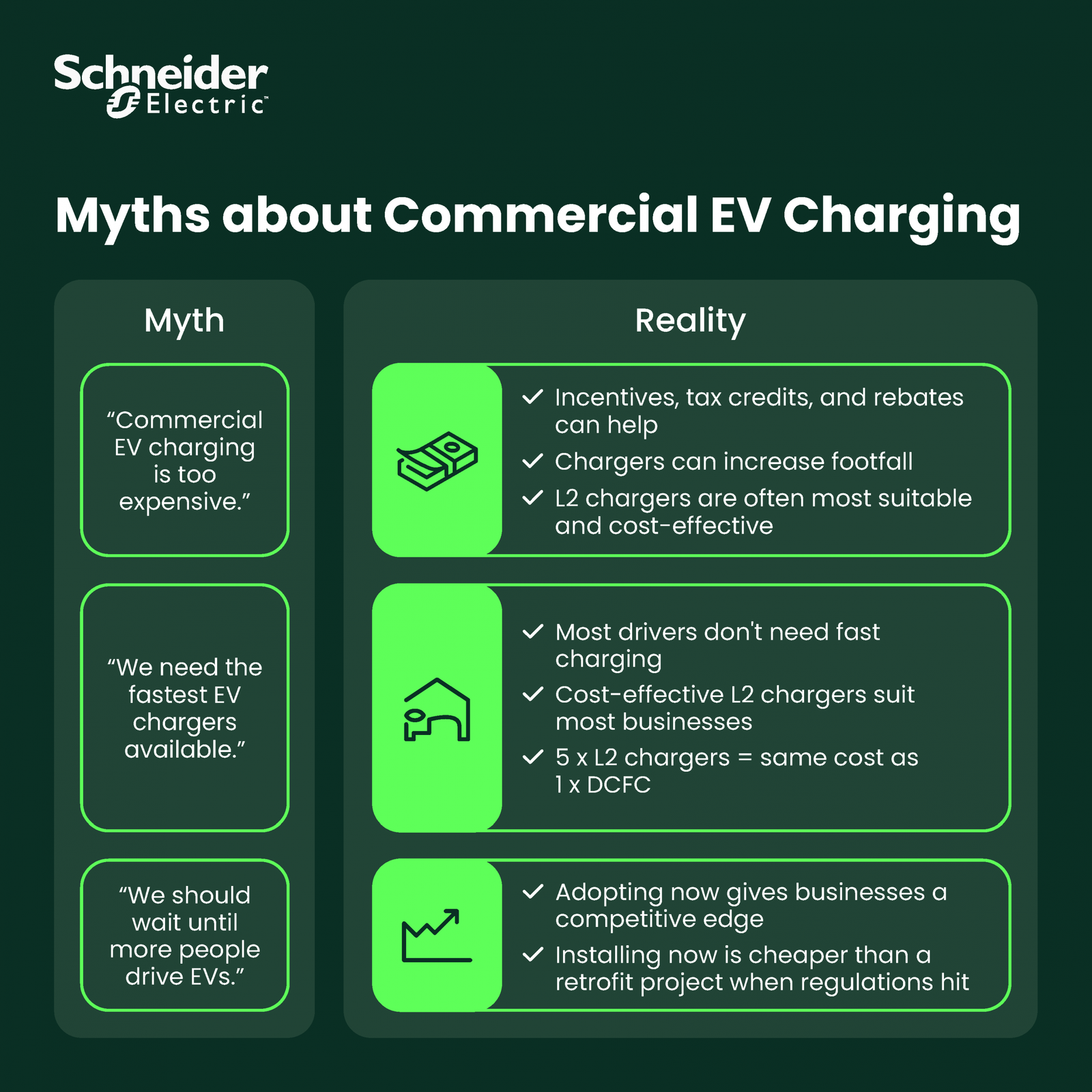
While the advantages of commercial EV charging are clear, many business owners may have reservations due to misconceptions about EV charging station installations.
However, setting up EV charging solutions needn’t be complex for businesses, as demonstrated below:
What is the Cost of Installing a Commercial EV Charging Station?
The business cost of a commercial EV charging station varies depending on a variety of factors, including:
- Type of EV charger installed
- Number of stations installed
- Labor requirements
- Installation requirements
- Additional features
One of the largest costs involved in a commercial EV charging project is site preparation, so planning is key for business owners. That is why an upfront site assessment is essential before committing to an EV charger installation.
At this stage, businesses must contact a trusted installer network, such as Qmerit, that can offer licensed and experienced contractors to support with planning, installation, and maintenance.
Hardware is another visible cost. However, a high-performance EV charging station will benefit businesses because they offer greater reliability long-term. Unreliable chargers with poor software systems can quickly erode a business’ EV charging ROI by reducing utilization.
Businesses must also consider the long-term operating costs of EV charging solutions too, which include:
- Electricity bills
- Software and network management
- Routine inspections
- Occasional repairs
- Cost of downtime, if chargers are offline
Are There Incentives to Support Businesses Adopting EV Charging Solutions?
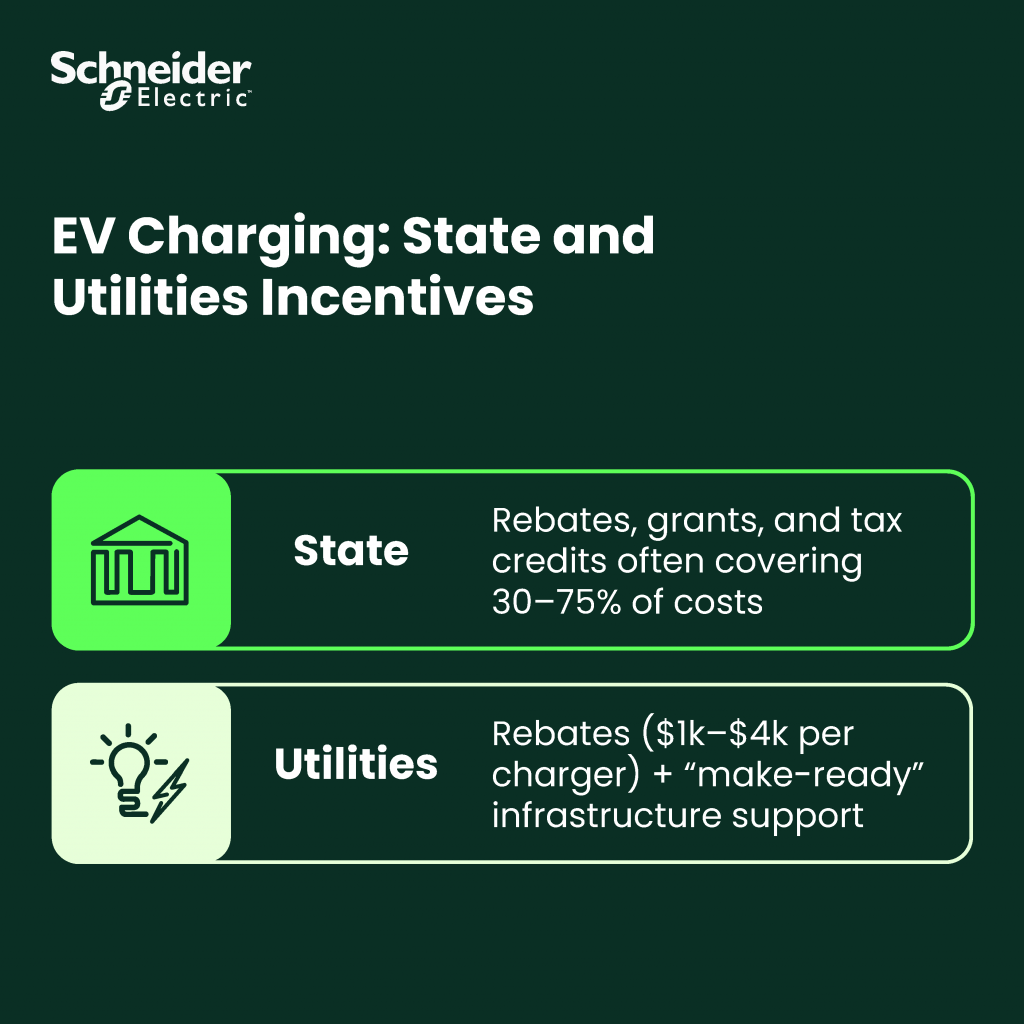
Rebates, tax credits, and incentivesare major drivers of EV charging deployment in the United States. These programs exist at two levels: state and utilities. Business owners can unlock EV charging savings by visiting Qmerit’s site.
How Can Businesses Measure EV Charging ROI?
The following infographic demonstrates how businesses can measure the ROI of commercial EV charging stations:
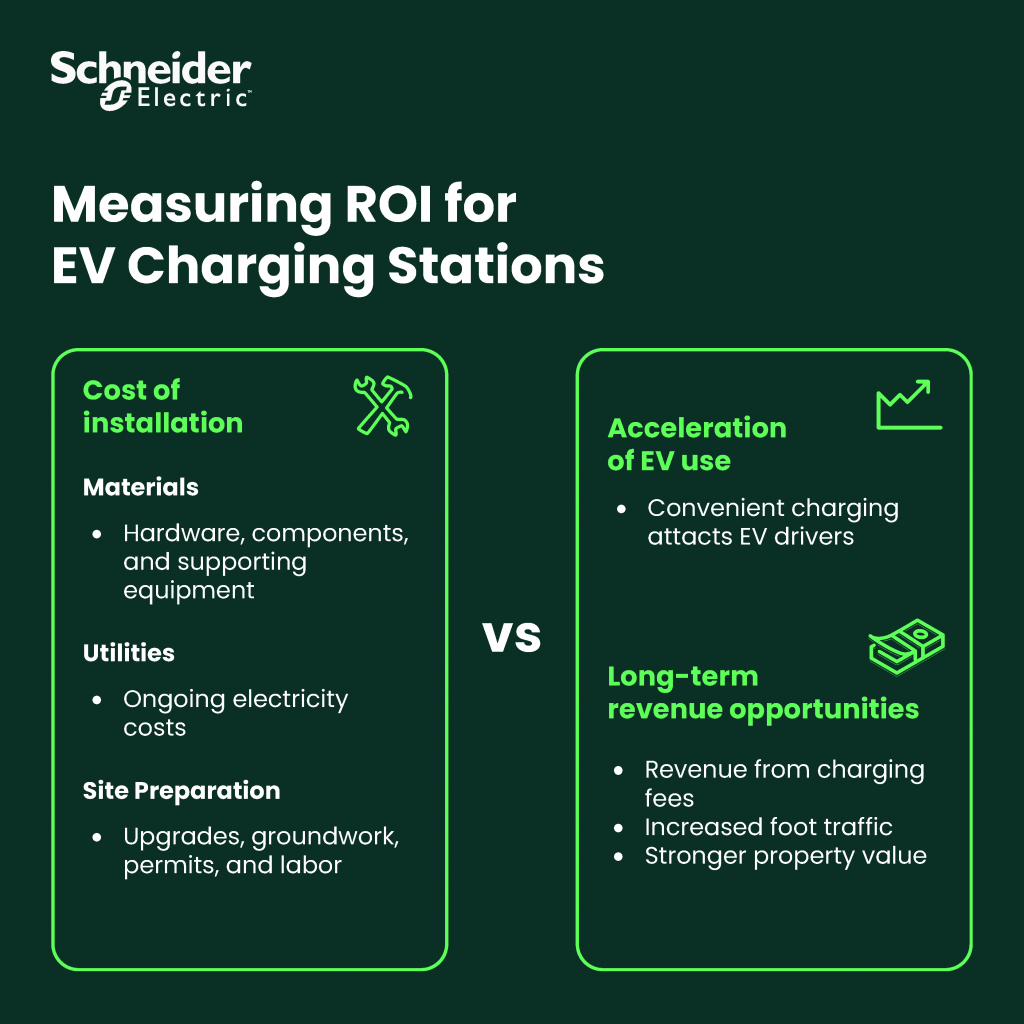
Choosing quality EV charging hardware at the initial installation stage matters. This generates higher uptime long-term which translates to:
A superior driver experience
+
Happy site hosts
= Increased revenue
What is the Average Payback Period for Businesses Investing in Commercial EV Charging Solutions?
The payback period for businesses varies by use case. However, well utilized L2 commercial chargers often recover costs in approximately 2–5 years.
What Impacts Commercial EV Charging ROI for Businesses?
Utilization is the single biggest driver of ROI. Therefore, businesses must create a plan to drive consistent use of their EV charging stations.
That is why it is important for businesses to select easy-to-use, actively managed EV chargers from trusted manufacturers, avoiding poor utilization and downtime.
How Can a Business Increase Utilization of its EV Charging Stations?
There are multiple ways to increase the use of EV charging solutions, as demonstrated below:
How Can the Type of EV Charger Installed Impact ROI for Businesses?
Installing dual‑port and networked commercial electric car chargers can help businesses to serve multiple drivers at once, which improves uptime and utilization.
How Can Investment in High-Quality EV Chargers Support ROI?
When an EV charging station is down or offline, it is not collecting revenue. Investing in high-performance EV charging solutions such as Schneider Charge Pro allows businesses to avoid this costly downtime.
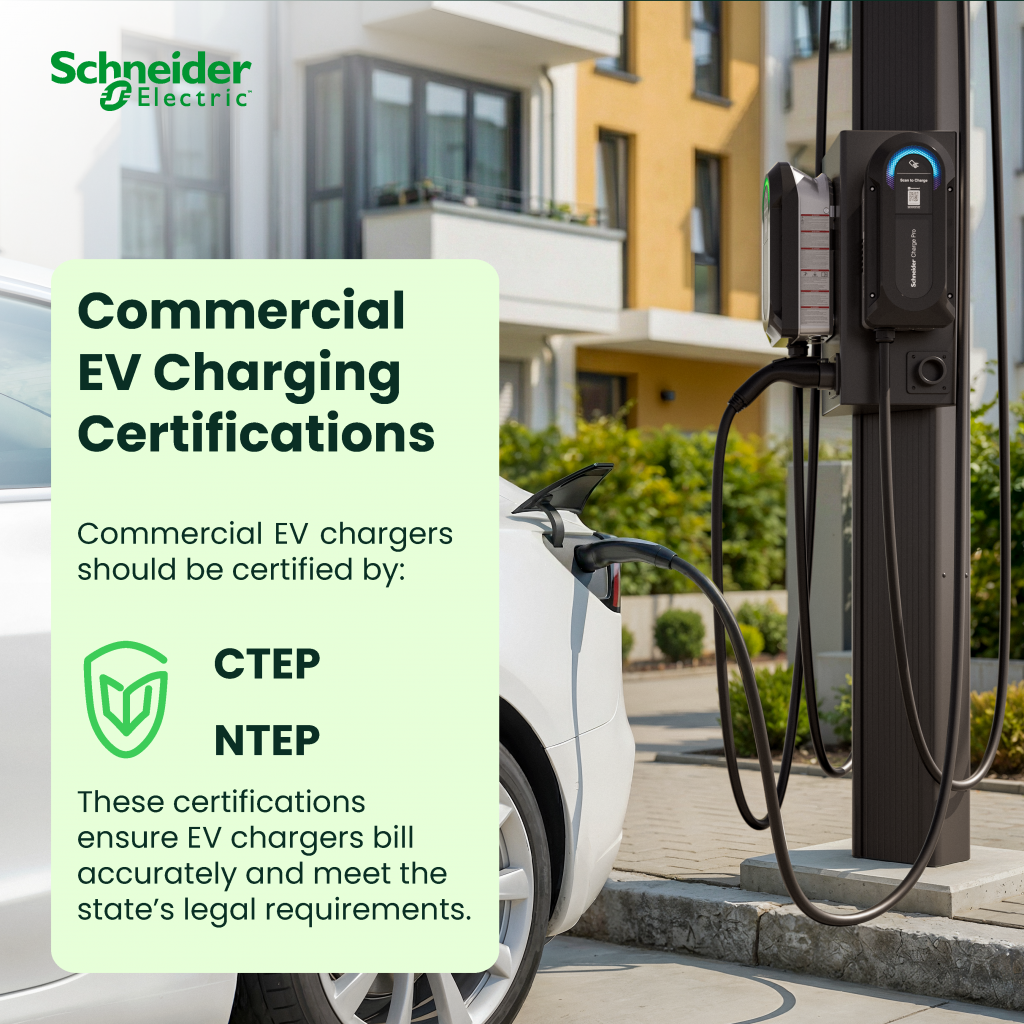
That is why partnering with trusted manufacturers, such as Schneider Electric, is key, given that they provide EV charging solutions with third-party testing certifications to guarantee consistent performance levels.
How Can Considering the Customer’s EV Charging Experience Impact ROI for Businesses?
Ensuring ease-of-use is a must for businesses wanting to provide a positive charging experience for customers.
Therefore, installing EV charging stations that offer benefits like simple web-based payments can mean that their EV charging stations are more likely to be used.
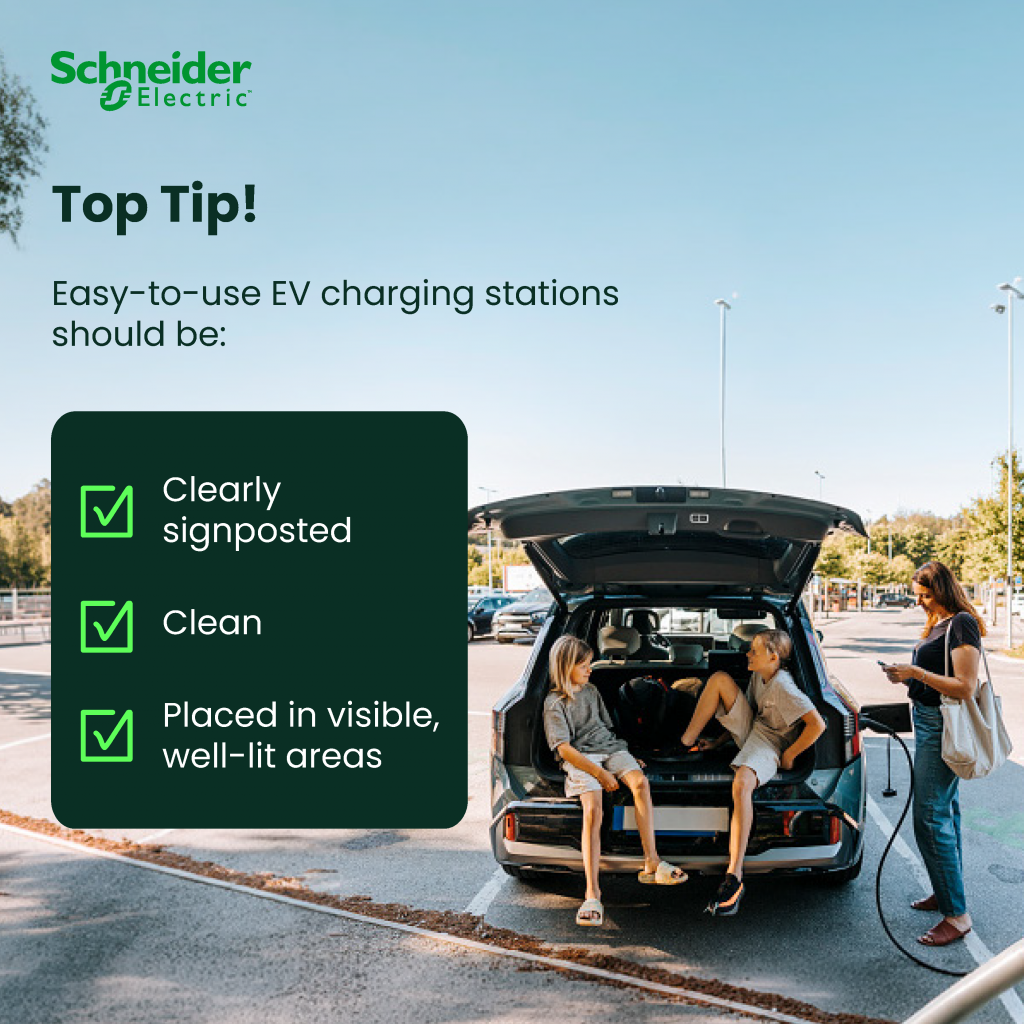
What Utilization Strategies Can Businesses Use for EV Charging Stations?
Additionally, to maximize ROI, businesses should use pricing and marketing initiatives, like EVouchers, to incentivize customers to use their chargers.
In the case of Schneider Charge Pro, business owners can also bundle with EV Connect Shield – a charger protection and repairs plan – designed to maximize uptime and eliminate unexpected repair costs.
How to Choose the Best Commercial EV Charging Station Providers to Maximize Revenue
Ultimately, choosing the best commercial EV charging stations and technologies at installation stage ensures consistent functionality, meaning that businesses spend less time fixing station issues and customers can enjoy more time charging their electric cars.
How to Select the Best Commercial EV Charging Hardware for Businesses
For businesses, an EV charger should be easy to:
- Install
- Commission
- Manage long-term
To support this, businesses should work with establish technology companies that offer enterprise-level EV charging stations, such as Schneider Charge Pro.
While ensuring a simple setup, these chargers are:
- Resilient and robust
- Built for commercial use
- Backed by warranties
In addition, chargers that boost customer experience by offering contactless payments, without the need to download an app, will also support increased usage and improved ROI for businesses.
Certifications are also important to consider, for example:
How to Select the Best Commercial EV Charging Software Providers
Beyond hardware, ensuring excellent software integration is essential to a profitable charging program. That’s why businesses should opt for EV charging stations that are manufactured by trusted companies with established software partners.
For example, Schneider Charge Pro is integrated with EV Connect’s Software+. EV Connect is a leading EV charging software provider that offers businesses a simple management system in Software+, supporting complete ownership of the charging experience, including:
- Pricing
- Web-Based Payments
- Usage
- Performance
- Data
- Visibility
Commercial EV Charging Solutions for Businesses
Installing EV charging solutions can increase profitability for many types of businesses, but to create a successful commercial EV charging program, planning is essential.
That’s why businesses should speak to a trusted installer to discuss what is possible now and in the future, before deciding to install EV charging stations.
This is because when looking to generate rapid ROI, factors like site preparation, high-quality hardware, resilient and reliable software, and effective support are key to long-term profitability and success.
Boost your businesses revenue by adopting smart commercial EV charging today.
Learn more about Schneider Charge Pro.
Watch the Schneider Charge Pro product video.


