
This blog was co-authored by Fadi Halawi (EV Fast Charging Infrastructure Leader
at Schneider Electric) and Roopa Jalakantan (Director of EcoStruxure Power Mission Critical at Schneider Electric).
Smartly managing power and energy through an integrated digital solution supports increased profitability, reliability and scalability for fast EV charging infrastructure providers.
As industries like logistics, public transport, mining, and construction expand their fleets of heavy electric vehicles, the need for robust fast charging infrastructure is becoming increasingly critical. And whether that’s provided through in-transit hubs offering rapid services, or depots that charge vehicles over scheduled periods, the demand will continue to increase as the importance of EVs grows.
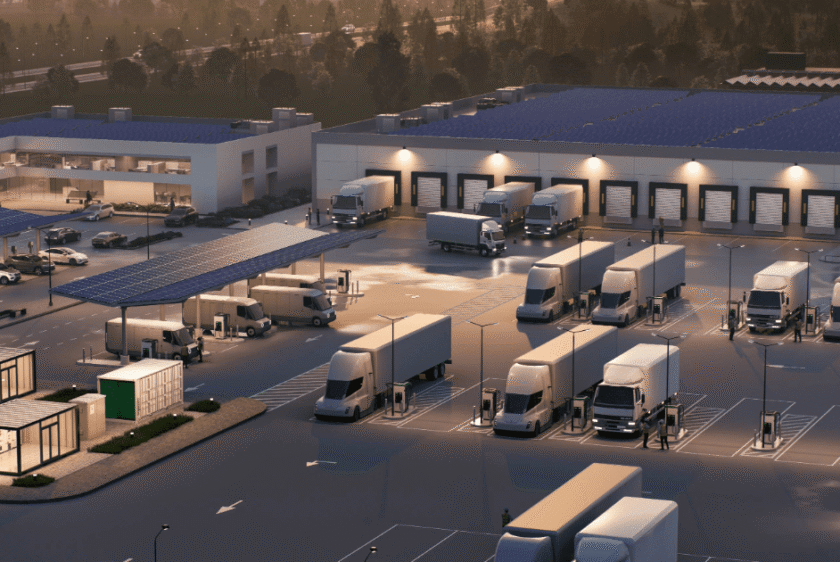
A fast-charging hub is a centralized facility equipped with high-power chargers (these typically range from 60 to 150 kW, but can extend up to 350 kW or even higher). They enable electric vehicles to recharge, significantly reducing charging time for fleet and transit operations. These hubs are designed to support rapid, simultaneous charging of multiple medium and heavy duty or commercial EVs.
To meet future demand, the world will require many more of these facilities. McKinsey estimates that by 2030, Europe alone will need more than 300,000 public and private charge points for medium- and heavy-duty trucks – 30 times the number today. This would consume 20 terawatt-hours (TWh) of electricity annually by 2030, roughly 0.5% of Europe’s total electricity demand. And the recent news that China is switching from diesel to electric trucks faster than expected suggests we can expect high charging demand to be seen globally. These figures underline how much new charging infrastructure will be required. But setting up charging stations is just the start. To deliver success, operators will have to address a range of complex challenges to ensure reliability, profitability and scalability.
Fast charging operators should optimize CapEx and OpEx by maximizing asset utilization while adopting competitive pricing and diverse business models. Uptime of chargers is vital – unreliable systems compromise revenue and user satisfaction. As EV adoption accelerates, facilities must support increasing charging demand while operating within grid constraints and restrictions. Building resilient, future-ready charging systems in close coordination with grid operators is critical to meeting evolving customer expectations and maintaining grid stability.
The strategic role of an integrated Dynamic Energy & Load Management System (DELMS) in enabling efficient EV charging infrastructure
To address these challenges, operators must recognize that effective fast charging goes beyond physical infrastructure. Optimal performance depends on intelligently managing energy flow – balancing dynamic energy pricing, available grid capacity, and charging demand. These variables interact in complex, real-time patterns that require digital orchestration. By leveraging advanced digital solutions, fast charging hubs can schedule charging to optimize energy distribution, operate within grid constraints, and ensure cost-effective, sustainable performance. Continuous monitoring of electrical assets and grid conditions further enhances reliability and operational efficiency.
While each of these factors can be managed digitally, the real advantage lies in deploying technology that can intelligently regulate them in an integrated, real-time manner. This is now offered through Schneider Electric’s “Dynamic Energy and Load Management System (DELMS)”, which co-ordinates charger load balancing, electrical distribution monitoring, managing infrastructure assets and energy through a single platform. This end-to-end solution can also communicate with external systems such as fleet/charge point management software, allowing it to handle complex demands efficiently without constant oversight. While connecting with multi brand chargers, this can support important uses such as:
- Reducing peak electricity use. As the need for EV fast charging grows, charge point operators (CPOs) will increasingly have to consider how to minimize their use of grid electricity at expensive peak times. Dynamic energy and load management allows them to schedule charging optimally, spreading the load as far as possible to match the available supply. In addition to easing grid stress, this approach enables operators to optimize energy costs – leveraging off-peak tariffs and avoiding demand-based penalties.
- Load Balancing. Load balancing is essential for maximizing returns on CapEx and OpEx investments in fast charging infrastructure. A dynamic energy and load management system enables operators to intelligently distribute power across multiple charging points and stations, ensuring optimal asset utilization. This approach allows providers to fully leverage existing infrastructure before investing in grid capacity expansion, helping maintain operational efficiency within grid constraints.
- Managing diverse energy sources with microgrid integration. As fast charging demands increasingly strain grid capacity, operators are turning to on-site solar, microgrids, and battery storage to improve reliability and efficiency. Integrating these systems with a smart load management platform enables smart co-ordination of energy sources, ensuring optimal use of generation and storage while maintaining scalable, cost-effective operations within grid constraints.
The true value of dynamic energy and load management lies in its flexibility. By integrating seamlessly with grid systems and fleet management platforms, it enables coordinated control of power flows, charge scheduling, and energy optimization. By harnessing cutting-edge edge and cloud technologies, DELMS delivers intelligent and dependable solutions with top-tier cybersecurity, ensuring resilience and reliability.
Cost-efficiency, reliability and sustainability
As the demand for fast charging services grows, dynamic energy and load management helps charging providers meet expectations in these crucial ways:
- Reduce total cost of ownership (TCO). By optimizing infrastructure capacity, DELMS supports operators to minimize investment costs for the existing grid connection, and avoid penalties and demand charges. This enables them to maximize returns on both CapEx and OpEx.
- Ensure uptime. As electrical systems become more complex and carry higher loads, the risk of outages increases. DELMS ensures reliable uptime by intelligently managing energy flow and system performance.
- Increase efficiency. By offering 360-degree system visibility, dynamic energy and load management helps businesses fine-tune performance and reduce the frequency of maintenance and repairs. End-to-end functionality supports better decision making while avoiding the complexity of multiple vendors and data silos. DELMS is compatible with a wide range of third party backends for automated billing.
- Enhance sustainability. By boosting efficiency and supporting the integration of renewables, dynamic energy and load management means operators can optimize their power use – contributing to sustainability goals and allowing them to meet strict emissions regulations.
Are you ready for the digitized smart charging future?
While many EV providers and CPOs are focused on building high-power physical infrastructure, long-term success will increasingly depend on the strength of their digital systems. Digital technology not only maximizes current asset performance, but also enables scalable operations and flexible services to meet evolving customer expectations. A recent study by Bain notes that the biggest opportunities within EV charging will increasingly be linked to software more than hardware – including next-generation services such as vehicle-to-grid charging. The authors add that with many segments still at an early stage, “decisions and investments today will play a significant role in determining the long-term winners”.
As EV players strive to meet their expected exponential growth in the emerging market and adapt to evolving charging behaviours, it’s essential to choose the right partner for their journey. Schneider Electric’s integrated solution – building on our extensive experience in electrical distribution management and digital innovation – makes us the natural choice. We look forward to working with you to power the charging hubs of the future.
https://www.se.com/ww/en/work/solutions/automotive-and-emobility/ev-fast-charging/?utm_source=blog_post&utm_medium=organic_social&utm_campaign=2026_jan_ww_ps_automo&campaign_objective=awareness&mcl_name=automo


